Was this page helpful?
Getting Started with ScyllaDB Cloud + DynamoDB Compatible API: A sample Media Player App with Alternator
1. Introduction
This guide will show you how to create a cluster in ScyllaDB Cloud, create a Media Player app from scratch, and configure it to use ScyllaDB as the backend datastore. It’ll walk you through all the stages of the development process, from gathering requirements to building and running the application.
As an example, you will use an application called Media Player. Media Player stores all the tracks you want to listen to and counts how many times you have listened to them. The application consists of three parts:
Validate if you have the Keyspace and Table needed to start storing your tracks/songs;
Access a REPL with commands to store/list/delete songs;
Run a simple stressor against ScyllaDB Cloud.
2. Requirements
Before starting your first project with the ScyllaDB Alternator API, we need to set up your environment.
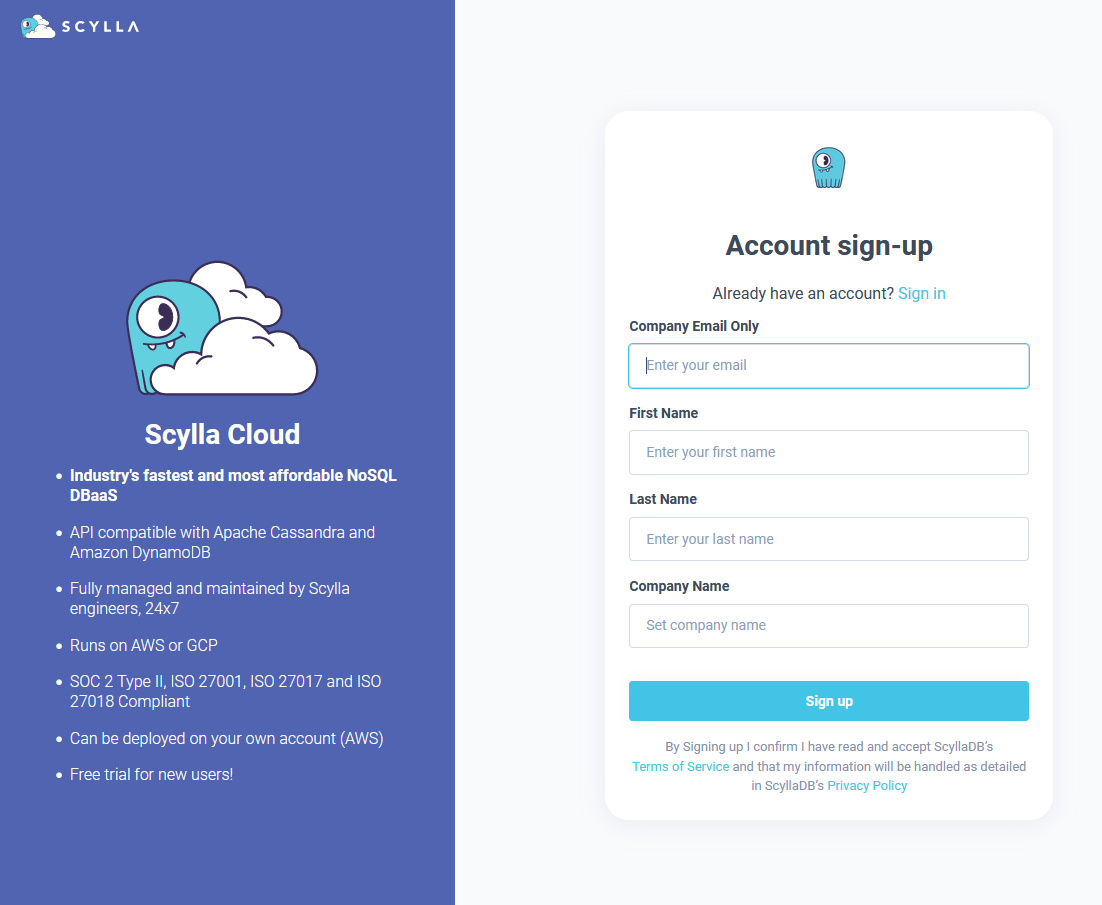
2.1 Create a ScyllaDB Cloud account
Before you start coding the project, you should create an account at ScyllaDB Cloud or login if you already have one.
2.2 Create a Cluster
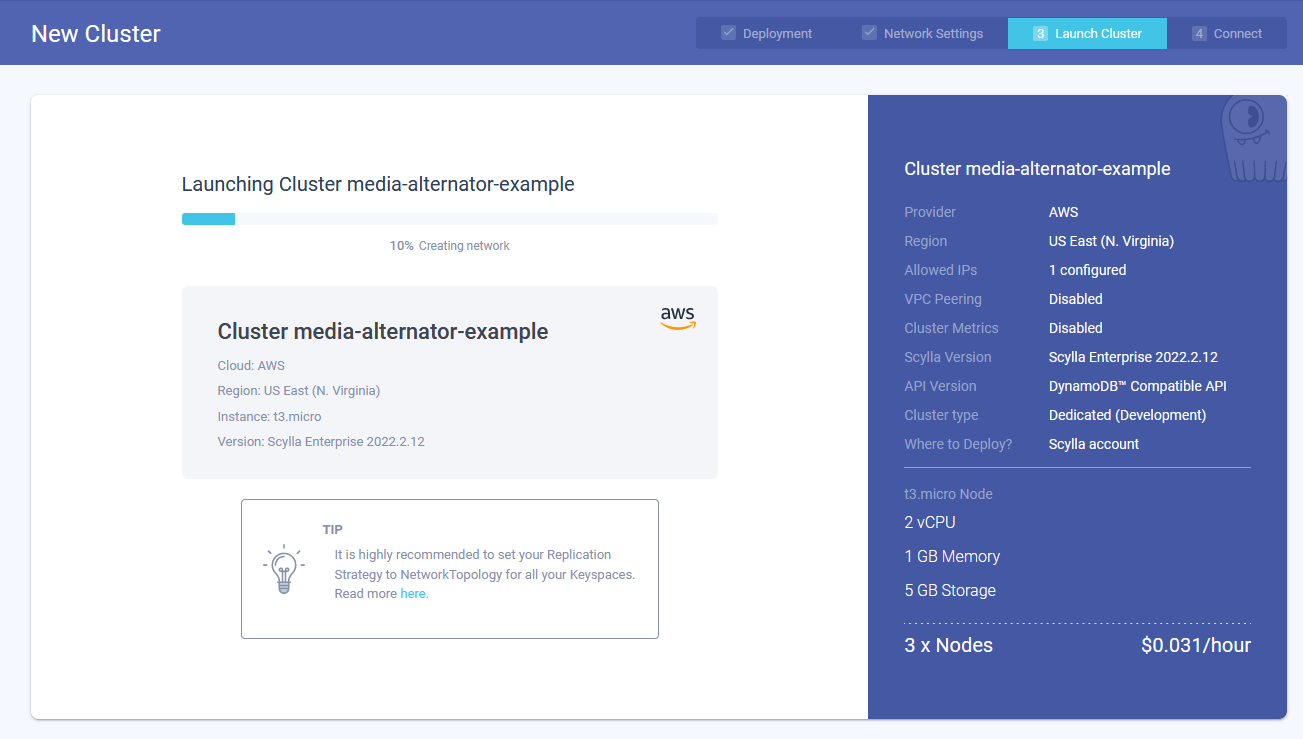
After creating and logging in to your ScyllaDB Cloud account, click Free Trial (or New Cluster > Dedicated VM). There, you should:
Give your cluster a name
Select “Amazon DynamoDB API compatible” in the ScyllaDB API section
Select the nearest region for your cluster
Keep the default auto-scaling policy. ScyllaDB Cloud scales the cluster automatically, so you don’t need to pick a node size.
On the network tab, make sure your IP address is correct and click “Launch Cluster”.
3. Connecting to your cluster
Now that you have the ScyllaDB Alternator running, you will see a panel like the picture below. It will be a three node cluster.
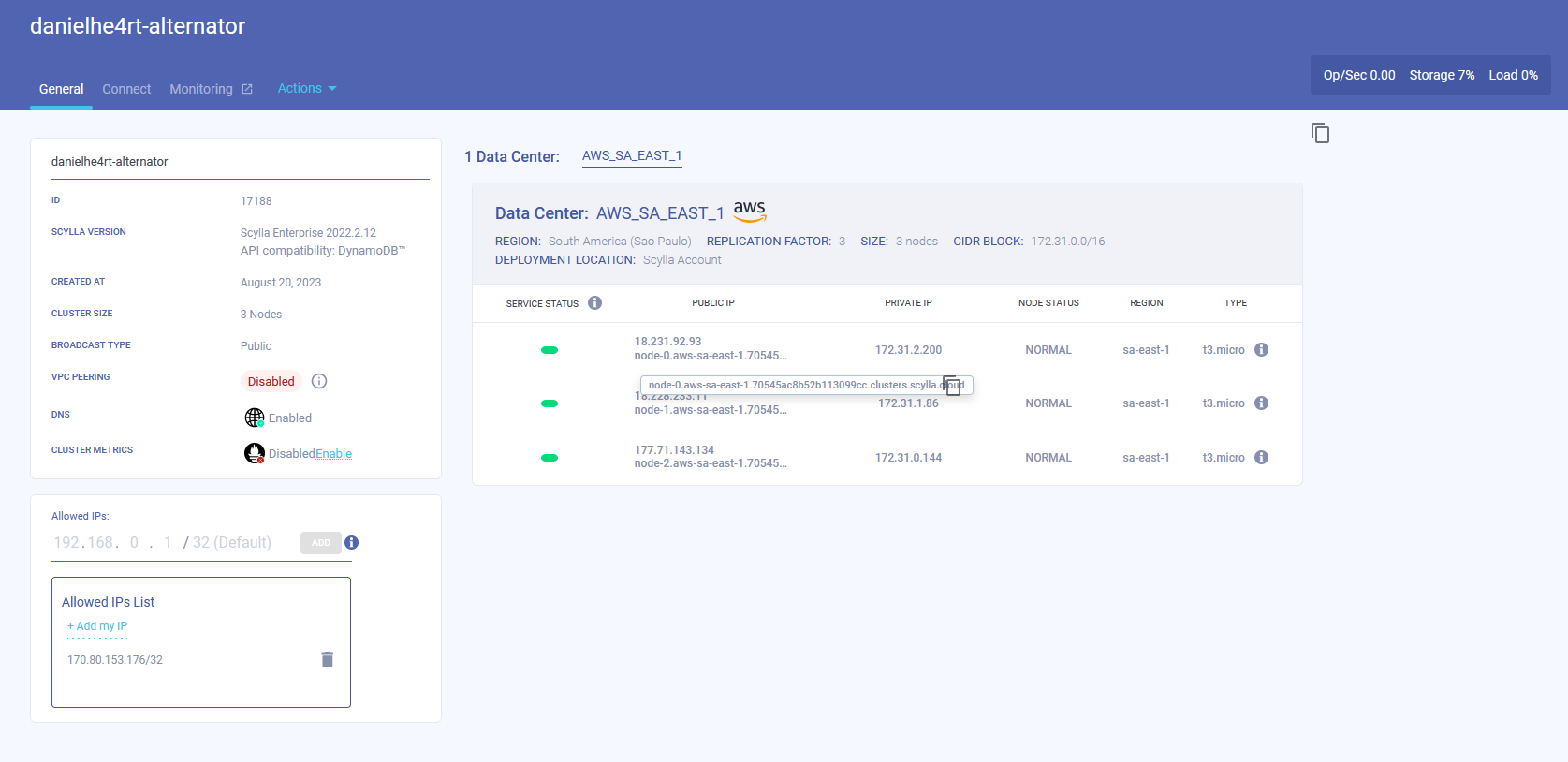
As you can see on the first node, the IP “100.51.91.97” will be used to connect to the “Endpoint URL” in any DynamoDB SDK or API.
Examples:
# Python Example
import boto3

alternator_client = boto3.resource('dynamodb',endpoint_url='http://localhost:8000',
                region_name='None', aws_access_key_id='None', aws_secret_access_key='None')
// PHP with AWS SDK
use Aws\DynamoDb\DynamoDbClient;

$alternatorClient = new DynamoDbClient([
    'endpoint' => "18.231.92.93:8000", // Alternator
    'credentials' => ['key' => 'None', 'secret' => 'None'],
    'region' => 'None'
]);
Now you are able to send requests to your ScyllaDB Alternator instance. Select the SDK for the language of your choice and start building!
4. Next Steps
Now that you have everything ready, let’s move to the project Design and Data Model with DynamoDB spectations!